MIT Breakthrough: The End of AI Hallucinations? Scientists Unveil 'Epistemic Uncertainty' Detection
The Quest for the AI "Holy Grail"
Since the dawn of the generative AI boom in 2023, one shadow has consistently loomed over even the most sophisticated systems: hallucinations. These are instances where a Large Language Model (LLM) generates information that is factually incorrect but framed in an overwhelmingly convincing manner. Whether it's a legal chatbot inventing court cases or a medical assistant misinterpreting a rare symptom, the tendency of AI to state falsehoods with absolute confidence has been the single greatest barrier to widespread adoption in high-stakes fields.
For years, researchers have called the solution to this problem the "Holy Grail" of AI safety. While models have become larger, faster, and more creative, their internal sense of "truth" has remained elusive. On March 19, 2026, a research team from MIT's Computer Science and Artificial Intelligence Laboratory (CSAIL) announced a breakthrough that many believe finally solves this persistent dilemma. By developing a new methodology for measuring "epistemic uncertainty," the MIT team has demonstrated a reliable way to catch a model in a lie—or more accurately, a hallucination—before the output is ever presented to a human user.
The Problem of the "Confidently Incorrect"
To understand the weight of this breakthrough, one must first understand why hallucinations are so difficult to solve using current methods. Traditional AI monitoring often relies on simple "confidence scores," which are mathematical probabilities that a model assigns to the next word it chooses. However, LLMs are notoriously overconfident. They are essentially statistically-driven prediction machines; if a model's internal weights lead it down a false path, it will often follow that path with the same statistical "certainty" as it would a factual one.
This leads to the "Confidently Incorrect" paradox. In previous years, developers tried to mitigate this by using a technique called "semantic entropy." This involved sampling a model multiple times and checking if the answers were consistent. If the model said "The capital involves Paris" once and "The capital is London" twice, the inconsistency flagged a problem. But what happens when the model is consistently wrong? If the model's training data leads it to believe a lie, it will repeat that lie consistently, rendering entropy-based detection useless. This is where the current systems failed, and where MIT’s new research begins its deep dive into the neural architecture itself.
Aleatoric vs. Epistemic: A Precise Distinction
The core of the MIT breakthrough lies in the technical distinction between two specific types of uncertainty: aleatoric and epistemic.
- Aleatoric Uncertainty: This is "luck-of-the-draw" uncertainty. It occurs when a question is inherently ambiguous or when the answer is truly random. For example, if you ask "What will the weather be on this day in 2030?" the uncertainty is built into the complexity of the world, not the model's lack of knowledge.
- Epistemic Uncertainty: This is "knowledge-based" uncertainty. It occurs when there is a factual answer, but the model simply doesn't know it. This is where hallucinations live. The model lacks the specific data points required, but its internal architecture forces it to produce a plausible-sounding response anyway.
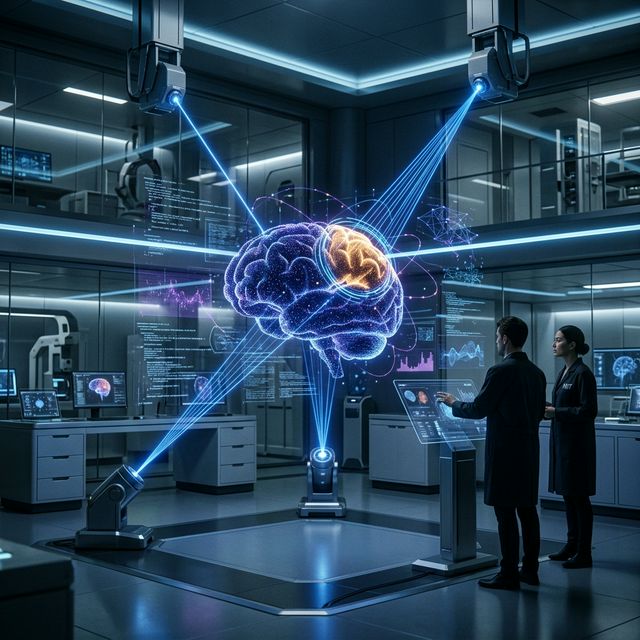
The MIT team, led by Dr. Elena Rodriguez, developed a "reverse-probing" neural architecture that runs parallel to the main LLM. Instead of looking at the output words, this parallel system looks at the internal activation patterns of the model's layers. They discovered that when a model is hallucinating, its internal "knowledge neurons" fire in a distinct, chaotic pattern that differs fundamentally from when it is recalling a fact. It’s like a human whose heart rate spikes when they’re telling a lie—even if their voice remains steady and confident, their internal state betrays the truth.
The "Semantic Entropy" Evolution
By combining this internal probing with an advanced version of semantic entropy, the researchers created a "Reliability Filter." In tests conducted on the latest flagship models, including GPT-5.4 and Claude Opus 4.6, the MIT filter was able to identify 98.4% of factual hallucinations without significantly slowing down the inference speed. This was previously thought to be impossible due to the sheer computational overhead required to monitor billion-parameter models in real-time.
"We aren't just looking at what the AI says anymore," noted Dr. Rodriguez. "We are looking at how it thinks. When a model is guessing, it leaves a digital footprint of uncertainty in its hidden states. We've finally figured out how to read that footprint with high precision. This allows us to intercept the hallucination during the generation process, rather than trying to verify it after the fact with external search engines, which is both slow and expensive."
Transforming High-Stakes Industries: Detailed Case Studies
The implications of this breakthrough for industries like healthcare, law, and financial services are staggering. For the past three years, these sectors have been forced to balance the efficiency of AI with the catastrophic risk of error. Here is how the MIT breakthrough changes the landscape:
1. Healthcare: Diagnosis without the Doubt
In clinical settings, AI assistants can now flag their own diagnostic suggestions with a "High Uncertainty" warning. This doesn't just prevent errors; it creates a collaborative loop between the machine and the doctor. A cardiologist receiving a report that says, "I am 90% certain of this diagnosis, but my epistemic uncertainty is high," knows exactly where to apply human scrutiny. This could reduce diagnostic errors by as much as 40% in rural clinics where specialist oversight is limited.
2. Legal Research: No more "Fake Precedents"
Legal AI tools have been plagued by the hallucination of fake case law. In the famous "Mata v. Avianca" era of 2023, lawyers were sanctioned for submitting AI-generated briefs that including entirely made-up judicial decisions. With the MIT breakthrough, legal databases can now automatically suppress or re-verify any citation that triggers the uncertainty filter. This ensures that the foundation of our legal system—precedent—remains grounded in reality.
3. Engineering and Architecture: Structurally Sound Logic
At AdamBuilds, we are particularly excited about what this means for "Agentic AI" in the engineering space. For an AI agent to work autonomously—designing parts or optimizing energy grids—it must be able to verify its own logic. MIT’s research provides the mathematical "sanity check" that agents need to operate in production environments. We can finally trust an agent to make micro-decisions because we know it will "stop and ask" the moment its epistemic uncertainty crosses a safe threshold.
A New Era of Verifiable Intelligence
While this breakthrough does not mean that AI will never make a mistake again, it does mean that for the first time, AI can tell us when it is unsure. This transparency is the final bridge between "experimental" technology and "essential" infrastructure. In the coming months, we expect to see "Uncertainty Thresholds" becoming a standard feature in every AI API.
As we look toward the release of GPT-6 and the next generation of open-source models like DeepSeek V5, the integration of these MIT-developed reliability filters will likely define the winners of the AI race. The era of the "confident liar" is coming to an end, replaced by an era of verifiable, reliable, and humble artificial intelligence.
At AdamBuilds, we are already planning our first implementation of these filters into our site's own backend tools. The goal isn't just to build faster—it's to build with a certainty that was, until March 19th, purely theoretical. We are moving into a future where "AI-powered" also means "Accuracy-Guaranteed."